
Most golfers spend plenty of time thinking about clubs.
Drivers, irons, wedges and putters all get attention.
But what about the one piece of equipment you use on every single shot?
Your golf ball.
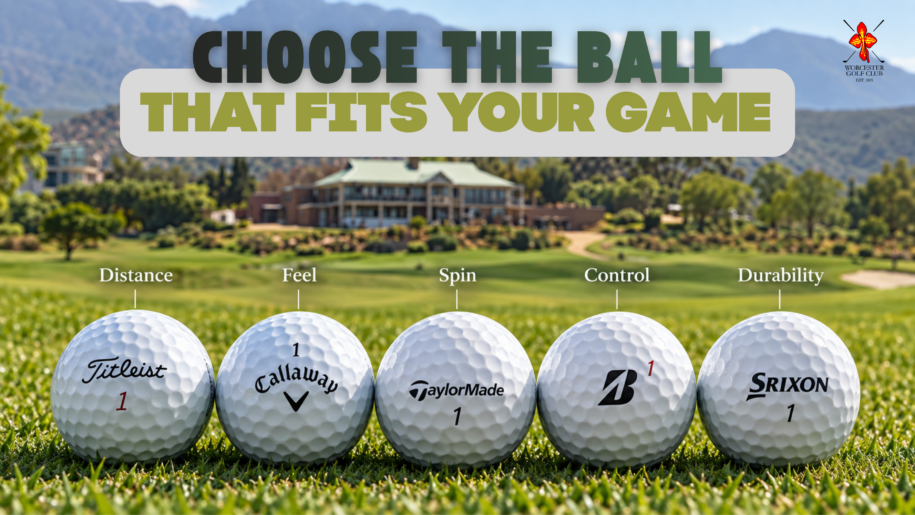
The ball you choose can influence distance, spin, feel, flight and control. That does not mean you need the most expensive ball on the shelf. It means you should understand what different golf balls are designed to do and choose one that suits your game.
Here is what golfers should know.
𝟏. 𝐆𝐎𝐋𝐅 𝐁𝐀𝐋𝐋 𝐂𝐎𝐍𝐒𝐓𝐑𝐔𝐂𝐓𝐈𝐎𝐍 𝐌𝐀𝐓𝐓𝐄𝐑𝐒
Golf balls are built in different layers.
Some are designed with two pieces, while others use three, four or more layers.
A two-piece ball is usually built around a large core with a durable outer cover.
These balls are often designed to provide good distance, durability and a firmer feel.
Multi-layer golf balls use additional layers to influence how the ball reacts with different clubs.
For example, a ball may be designed to produce lower spin with the driver while still offering more spin and control with wedges.
The construction affects how the ball behaves from tee to green.
𝟐. 𝐖𝐇𝐀𝐓 𝐃𝐎𝐄𝐒 𝐆𝐎𝐋𝐅 𝐁𝐀𝐋𝐋 𝐂𝐎𝐌𝐏𝐑𝐄𝐒𝐒𝐈𝐎𝐍 𝐌𝐄𝐀𝐍?
Golf ball compression refers to how much the ball deforms when it is struck.
Different balls can feel softer or firmer depending on their construction and compression.
A golfer with a slower swing speed may prefer a softer-feeling ball because it can feel easier to compress.
Players with higher swing speeds may prefer a firmer ball that gives them the response they want at impact.
However, compression is not only about swing speed.
Feel also matters.
Some golfers simply prefer a soft feel off the putter and wedges, while others like a firmer response.
The best golf ball for your game is one that gives you confidence and consistent results.
𝟑. 𝐒𝐏𝐈𝐍 𝐂𝐀𝐍 𝐂𝐇𝐀𝐍𝐆𝐄 𝐇𝐎𝐖 𝐘𝐎𝐔𝐑 𝐁𝐀𝐋𝐋 𝐅𝐋𝐈𝐄𝐒
Spin plays a major role in golf ball performance.
Too much unwanted spin from the driver can exaggerate a slice or hook.
A ball designed for lower driver spin may help some golfers produce a more controlled flight.
Around the green, however, spin can be useful.
More short-game spin can help the ball stop faster on approach shots, chips and pitches.
This is why many premium golf balls are designed to reduce spin with longer clubs while still producing more control around the green.
The question is not simply whether a ball spins more or less.
It is where you want that spin to happen.
𝟒. 𝐅𝐄𝐄𝐋 𝐈𝐒 𝐌𝐎𝐑𝐄 𝐈𝐌𝐏𝐎𝐑𝐓𝐀𝐍𝐓 𝐓𝐇𝐀𝐍 𝐘𝐎𝐔 𝐌𝐈𝐆𝐇𝐓 𝐓𝐇𝐈𝐍𝐊
Feel is personal.
Some golfers prefer a very soft ball.
Others prefer something firmer.
There is no single correct answer.
A softer ball may feel more comfortable when putting and playing short shots.
A firmer ball may provide a more solid sensation at impact.
The important thing is consistency.
If you regularly change between very different golf balls, the feel off your putter and wedges may change from round to round.
That can make distance control harder.
If you find a ball that feels comfortable and performs well, try using it consistently for a few rounds.
𝟓. 𝐓𝐇𝐄 𝐑𝐈𝐆𝐇𝐓 𝐁𝐀𝐋𝐋 𝐂𝐀𝐍 𝐇𝐄𝐋𝐏 𝐖𝐈𝐓𝐇 𝐃𝐈𝐒𝐓𝐀𝐍𝐂𝐄
Golf ball distance is influenced by several factors, including ball speed, launch and spin.
Different balls are designed to produce different performance characteristics.
Some are built primarily for distance.
Others focus more on a combination of distance and short-game control.
Golfers should remember that the longest ball for one player may not be the longest ball for another.
Your swing speed, launch conditions and strike quality all influence the result.
Do not choose a ball only because it promises more distance.
You still need predictable control.
𝟔. 𝐁𝐀𝐋𝐋 𝐂𝐎𝐍𝐃𝐈𝐓𝐈𝐎𝐍 𝐀𝐋𝐒𝐎 𝐌𝐀𝐓𝐓𝐄𝐑𝐒
Even the right golf ball will not perform at its best if it is badly damaged.
Scuffs, cuts and deep marks can affect the surface of the ball.
That may influence flight and consistency.
Before starting a hole, check the condition of your ball.
A small cosmetic mark may not matter much, but a badly damaged cover is worth replacing.
Golfers who frequently use balls recovered from water should also be aware that older balls may no longer perform exactly as they did when new.
You do not need to replace a ball after every few holes, but playing with a ball in reasonable condition makes sense.
𝟕. 𝐇𝐎𝐖 𝐒𝐇𝐎𝐔𝐋𝐃 𝐘𝐎𝐔 𝐂𝐇𝐎𝐎𝐒𝐄 𝐓𝐇𝐄 𝐑𝐈𝐆𝐇𝐓 𝐆𝐎𝐋𝐅 𝐁𝐀𝐋𝐋?
Start with your own game.
Ask yourself:
Do I need more distance?
Do I struggle with too much spin from the tee?
Do I want more control around the green?
Do I prefer a soft or firm feel?
How important is durability?
What price range am I comfortable with?
Then test a few options.
Do not judge a ball after one drive.
Pay attention to how it performs with your driver, irons, wedges and putter.
You may find that the ball that gives you the most confidence is not necessarily the one with the biggest claims on the box.
𝟖. 𝐃𝐎 𝐁𝐄𝐆𝐈𝐍𝐍𝐄𝐑𝐒 𝐍𝐄𝐄𝐃 𝐀 𝐏𝐑𝐄𝐌𝐈𝐔𝐌 𝐆𝐎𝐋𝐅 𝐁𝐀𝐋𝐋?
Not necessarily.
A beginner may benefit more from a durable, affordable ball that offers good distance and a comfortable feel.
As your game improves, you may begin noticing differences in spin, launch and short-game control.
That is when experimenting with different golf ball types becomes more useful.
The key is matching the ball to your current game, not to somebody else’s handicap.
𝟗. 𝐂𝐎𝐍𝐒𝐈𝐒𝐓𝐄𝐍𝐂𝐘 𝐂𝐀𝐍 𝐁𝐄 𝐌𝐎𝐑𝐄 𝐕𝐀𝐋𝐔𝐀𝐁𝐋𝐄 𝐓𝐇𝐀𝐍 𝐂𝐇𝐀𝐍𝐆𝐈𝐍𝐆 𝐁𝐀𝐋𝐋𝐒 𝐄𝐕𝐄𝐑𝐘 𝐑𝐎𝐔𝐍𝐃
One of the simplest things you can do is play the same model of ball consistently.
That gives you a more predictable feel.
You begin to understand how far your chips release.
You become familiar with how the ball feels off the putter.
You learn how it reacts with your wedges.
Consistency makes it easier to judge performance.
Constantly switching between completely different golf balls can make those small adjustments more difficult.
𝐒𝐎, 𝐃𝐎𝐄𝐒 𝐘𝐎𝐔𝐑 𝐆𝐎𝐋𝐅 𝐁𝐀𝐋𝐋 𝐑𝐄𝐀𝐋𝐋𝐘 𝐌𝐀𝐓𝐓𝐄𝐑?
Yes.
But the right golf ball is not necessarily the most expensive one.
It is the ball that suits your swing, your priorities and the way you play.
Distance matters.
Spin matters.
Feel matters.
Control matters.
And consistency matters.
The goal is not to find the perfect golf ball for every golfer.
It is to find the golf ball that works best for you.
𝐏𝐔𝐓 𝐘𝐎𝐔𝐑 𝐆𝐎𝐋𝐅 𝐁𝐀𝐋𝐋 𝐓𝐎 𝐓𝐇𝐄 𝐓𝐄𝐒𝐓
The best way to understand how a golf ball performs is to play it.
Take note of the flight off the tee, the feel on approach shots, the control around the green and how it responds with your putter.
Then compare.
Your golf ball may look like one of the smallest pieces of equipment in your bag, but it influences every shot you play.
Ready for your next round?
Book your tee time at Worcester Golf Club and see how the right ball performs across your game.
𝑺𝑴𝑨𝑳𝑳 𝑫𝑰𝑴𝑷𝑳𝑬𝑺. 𝑩𝑰𝑮 𝑫𝑰𝑭𝑭𝑬𝑹𝑬𝑵𝑪𝑬. ⛳